Showing posts with label Historical Perspective. Show all posts

The Best All-Stars in Marlins History, Part 1

Monday, July 15, 2013

With the annual All-Star Game on deck, Ted and I thought it would be fun to look back at every All-Star in franchise history and sort the wheat from the chaff. The Marlins have benefited from MLB's rule that every team must be represented at the midsummer classic, as you'll see below. Indeed, it is a double-edged sword: it allows fans of bad teams to have at least a little rooting interest in the game, but it also results in some very undeserving All-Star selections. Today we will look at the bottom half of the ledger, with the top half coming Tuesday.

For purposes of ranking, we looked at each players Wins Above Replacement (as calculated by Baseball Reference and either ERA+ (for pitchers) or OPS+ (for position players). We excluded Jose Fernandez, as he only has half a season of stats to compare, and did not account for any pre-/post-ASG split (because that would have taken more time than we were willing to invest). Incidentally, Fernandez already has more WAR than the bottom 6 players on the list (2.5), and should he continue his hot play could easily catapult into the top half of this list.

Onto the rankings, beginning with the Thanks for Showing Up division (* denotes ASG starter):
39. Alex Gonzalez, 1999 (0.7 WAR, 91 OPS+): Someone had to go in 1999, and it was Gonzalez. He didn't have a terrible year, but his .277 batting average was complemented by only 15 walks in 591 plate appearances.
38. Edgar Renteria, 1998 (0.9 WAR, 88 OPS+): See above. El NiƱo led the NL by getting caught stealing 22 times.
37. Gaby Sanchez, 2011 (2.7 WAR, 113 OPS+): Gaby wasn't that bad in 2011, but in hindsight Giancarlo Stanton (4.1 WAR, 141 OPS+) would have been a better choice. Sanchez hit .293 in the first half of the season, then took a major nosedive, hitting .225 in the second half.
Next up, the Good Thing Your Position is Not That Deep division:
36. Paul Lo Duca, 2005 (1.2 WAR, 92 OPS+): Look, no one expects a catcher to do that much on offense. But you do have to do something on defense every once in awhile. Lo Duca was third in the NL with 29 runners caught stealing, but also gave up the most stolen bases (89 - for a CS% of 24.6%).
35. Luis Castillo, 2002 (2.0 WAR, 95 OPS+): Castillo led the NL with 48 stolen bases, but got caught 15 times, second most in the league. He was solid on defense, and hit .301.
34. Charles Johnson, 2001 (2.4 WAR, 100 OPS+): CJ threw out 37 would-be base stealers (5th in the NL), but was the epitome of average at the plate.
Now let's pause and consider that democracy is not always the optimal decision-making mechanism. This is the Fan Votes are Flawed division:
33. Gary Sheffield*, 1993 (-0.1 WAR, 120 OPS+): Acquired in a late-June trade with the Padres, Sheffield was voted in by fans as a starter, even though he probably did not deserve it. His terrible defense (-3.0 dWAR) outdid a so-so offensive year (2.9 oWAR). His 34 errors were third in the NL. On the plus side, Sheffield went 2 for 3 with a home run in the game, so at least he acquitted himself nicely.
32. Hanley Ramirez*, 2010 (2.7 WAR, 126 WAR): Not that we didn't love watching Ramirez start in the All-Star Game for the third straight season, but this selection was based largely on his reputation (having won the batting title the previous season). He hit .300 in 2010, but in hindsight this season was the beginning of his decline into a very undistinguished hitter (though he has been very hot thus far in 2013).
Our next category is the Franchise Hero division, featuring two players who can do no wrong:
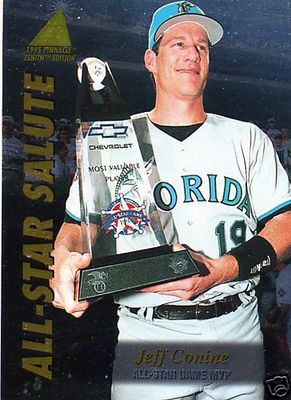
31. Jeff Conine, 1994 (2.8 WAR, 130 OPS+): Conine had a better year in 1994 than his other All-Star season, but he didn't win MVP in the 1994 game, so that knocks him down a few pegs.
30. Mike Lowell, 2002 (3.0 WAR, 116 OPS+): Lowell was better in 2003, but
29. Lowell, 2003 (2.7 WAR, 128 OPS+): Lowell had his best season with the Marlins in 2003, hitting a career-high 32 home runs despite missing the last month of the season with a broken hand. He also won the NL Silver Slugger for third-basemen.
28. Conine, 1995 (2.6 WAR, 135 OPS+): Not the most distinguished season, but Conine did win ASG MVP thanks to his decisive home run. 
These guys all had better All-Star years, but were still clearly deserving of the honor. It's the Better Seasons in the Portfolio division:
27. Dan Uggla, 2006 (3.0 WAR, 112 OPS+): He had better years to come, but 27 HR and .480 slugging as a rookie is nothing to be ashamed of. Uggla finished third in NL Rookie of the Year voting, behind teammate and winner Hanley Ramirez and Ryan Zimmerman of Washington.
26. Miguel Cabrera, 2007 (3.2 WAR, 150 OPS+): His last All-Star year with the Marlins was his worst, but he still hit 34 home runs with a .965 OPS.
25. Cabrera, 2004 (3.4 WAR, 150 OPS+): 33 home runs, 112 RBI in his first full season in the majors. Yeah, he was pretty good.
24. Castillo, 2005 (3.6 WAR, 108 OPS+): Castillo won his third straight NL Gold Glove, hitting above .300 for the fifth time in seven seasons.
23. Dontrelle Willis, 2003 (3.9 WAR, 127 ERA+): The Rookie of the Year and folk hero of the 2003 World Series team, Willis could do no wrong. 
These two appeared in the midsummer classic during their only year with the team, making them the One-Year Wonder division:
22. Armando Benitez, 2004 (3.4 WAR, 319 ERA+): Led the NL with 47 saves, and had a crazy-outlier .176 BABIP. Sometimes it's better to be lucky than good (and even better to be both).
21. Moises Alou, 1997 (3.5 WAR, 130 OPS+): Alou slashed .292/.373/.493 en route to a World Series title. Sheffield was arguably better among his teammates, but he did not make the All-Star team.
Rounding out the first part is the One-Timers' Club, both of whom made one All-Star appearance as Marlins (though both made additional appearances with other teams):
20. Ryan Dempster, 2000 (4.2 WAR, 121 ERA+): Hard to remember, but Dempster was once the ace of the Marlins' staff (shudders). He had 8.3 K/9IP, but benefitted largely from having no other good All-Star candidates on the team that year.
19. Bryan Harvey, 1993 (4.0 WAR, 257 ERA+): Harvey was third in the NL with 45 saves for the expansion Marlins, helped by a career-low .240 BABIP. His 0.841 WHIP was absurd.
Click here to read Part 2.

Read more...

Oh no, LoMo

Wednesday, February 15, 2012

The Marlins have shown once again that when it comes to tone-deaf PR, they are second to none in MLB. Logan Morrison has long wanted to wear the number 5 to honor his late father, Tom. Tom Morrison's favorite player was George Brett, who also wore the number 5. In LoMo's words, Tom "told me to model my game" after Brett when he was learning the game.

But the Marlins retired the number 5 before they had ever played a game in order to honor Carl Barger, the team's first president who died suddenly during the 1992 winter meetings. But having made a convenient shift to the "Miami Marlins" this winter, the team felt justified enough to ignore former  owner Wayne Huizenga's promise that "No other Florida Marlin will ever wear No. 5."

The Barger family, as you may imagine, is not happy. The team didn't even bother to contact them, and their promise to honor Barger with a plaque at the new stadium is hugely incommensurate with the un-retiring of number 5. Making this all the more laughable is that the team claims it tried for months in vain to contact the Barbers, but it took the Palm Beach Post 5 minutes to find their number.

The move makes more sense when you consider what Morrison gets out of the deal. No other Marlin has been as big a thorn in the side of management over the past year as Morrison. Giving him an opportunity to honor his late father will surely improve his opinion of the front office. And while Carl Barger was a close personal friend of Huizenga, he had no connection whatsoever to Jeffrey Loria. The team will once again have egg on its face, but if doing so allows them to more effectively manage one of their budding stars, then the tradeoff is worth it.

This is not to say the Marlins are justified. A retired number for a dead executive strikes me as a tad cheesy, but a promise is a promise, and there are plenty of ways for Morrison to honor his dad that don't involve the Marlins breaking this promise. While the team is being less than moral here, they are clearly getting some benefit from the move, one which (to them) outweighs the cost of the bad PR.

Read more...

Javier Vazquez is an Asshole

Thursday, September 22, 2011


A bit harsh, but very true. The first half of the year, Javy sucked. His first 14 starts were a parade of people circling him around the bases. He posted a lofty 6.85 ERA. So of course after the team's abysmal month of June, where they went from ten games over .500 to ten below, he turns it around! Since that point he is Cy-worthy with a 9-4 record and a 1.84 ERA! Well, at least he can carry this turnaround into next year?

Nope. All reports indicate he will most likely retire at the end of this season. Doh!

All that is bad enough but last night was the final straw. With seven more shutout innings, Javy extended his scoreless innings streak to 25, besting the previous mark for a Marlins starting pitcher (24 2/3), held by none other than Pat Rapp.

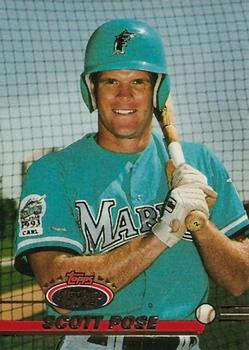
Rapp is hero here at Marlins Diehards. He is one of the most Marlins players of all time. Just look at the picture. All teal hat. Generic face. A stereotypical no-name journeyman who patched together a few decent years for the Fish. We love him. And taking away probably his last claim to fame is not cool.

Javy, this aggression will not stand. Unless of course you do decide to come back and win 15+ games in 2012. Then we may forgive you.

Read more...

The titans of Marlins history, in one place

Friday, September 9, 2011

The Marlins announced plans to leave Sun Life Stadium with a bang, scheduling an on-field celebratory ceremony for their final home game on September 28. You better sit down before reading this list of attendees, it's a doozy:
Scheduled attendees include Kurt Abbott, Antonio Alfonseca, Moises Alou, Alex Arias, Bruce Aven, Rickey Bones, Bobby Bonilla, Kevin Brown, Luis Castillo, Greg Colbrunn, Jeff Conine, Reid Cornelius, Andre Dawson, Alex Fernandez, Cliff Floyd, Chris Hammond, Lenny Harris, Bryan Harvey, Livan Hernandez, Charlie Hough, Charles Johnson, Josh Johnson, Rene Lachemann, Al Leiter, Mike Lowell, Josias Manzanillo, Jack McKeon, Robb Nen, Vladimir Nunez, Tony Perez, Mike Piazza, Scott Pose, Hanley Ramirez, Pat Rapp, Ivan Rodriguez, Cookie Rojas, Benito Santiago, Gary Sheffield, Julian Tavarez, Tony Taylor, Michael Tejera and Preston Wilson.
Whoa whoa whoa, Greg Colbrunn, Scott Pose AND Pat Rapp, all in one place? What a get for the Marlins PR team!

In all seriousness, nice touch inviting Piazza, who is the embodiment of the team's spendthrift ways (involved in not one but two salary-dumping trades in the same week!).

And yes, Ted and I are thrilled that our old friend Antonio Alfonseca will be there. We're only disappointed that Jorge Julio and Kevin Gregg could not join him and complete the shaky reliever trifecta.

The team will open the 2012 season in its as-yet unnamed new ballpark on the former site of the Orange Bowl in Little Havana.

Read more...

Geography and Demography

Wednesday, January 26, 2011


Last night, Forbes.com posted an article by Patrick Rishe in which Rishe examines three factors which have made Super Bowl contestants Green Bay Packers and Pittsburgh* Steelers two of the most popular (as in top 5) teams in the NFL. Their popularity has many predicting record ratings for this year's Super Bowl. Rishe examines three factors which have led them to their level of popularity, which both have sustained for a long while:

  1. History, as explained by the "first-mover advantage." Both were early entrants in the league, both had near total access to the entire market share of NFL fans, and both won championships early (the Packers were the Team of the 60s in NFL lore, while the Steelers were the Team of the 70s). This access allowed them to conquer a new frontier, so to speak. Most importantly, "though both franchises had their struggles and extended bouts away from postseason play during the 80s, the market share and branding that took place years ago made it possible to rekindle those allegiances as both franchises slowly returned to glory in the 90s and beyond."
  2. Geography. Pittsburgh and Green Bay are mid-level economic markets (Pittsburgh is the 22nd largest metropolitan area, Green Bay the 42nd). Smaller markets with successful teams "tend to breed more loyal and rabid fanbases," invoking the St. Louis Cardinals to bolster his argument. 
  3. Financial structure. Due to the NFL's very equitable revenue sharing and hard salary cap, both franchises (Green Bay an anachronistic publicly-owned football team, Pittsburgh's controlling partners only control 30%) have the same financial resources as large-market teams in the NFL, allowing them equal access to the top players in the league. 
What does this have to do with the Florida Marlins? The Marlins' historic, geographic, and financial system are far from those of the Steelers and Packers. And the first two factors compound the third for the Marlins. As such, Marlins fans the world over are greeted with puzzled stares when they assert their fandom, and the team is saddled with the "terrible fanbase" tag, playing for bandwagon fans or no fans, with no exceptions or gray areas. But if you can credit structural factors to the growth of two fanbases, you can certainly point to them when explaining why your favorite team routinely plays in half empty stadiums.

The Marlins, as we all know, were a 1993 expansion team, beginning play nearly 90 years after the first World Series. By the time the Marlins had entered MLB, virtually everyone in America outside the home market (and many inside) already had a favorite baseball team. Ted and I had the Orioles (this was long enough ago for that to not be a bummer). I think people of my generation (born in the 1980s) all know one peer in Miami who could have become a Marlins fan as a kid but instead retained his or her prior allegiances. In short, the Marlins entered a saturated market.

On top of that, the Marlins are in the 7th largest metropolitan area, a market with ample entertainment options. And as a subset of the geographic factor, I would add that phsyical migration has improved the Packers' and Steelers' national brand while hindering the Marlins' profile. When Green Bay and Pittsburgh first joined the NFL in the 1920s, the term "rust belt" was decades from inception. The industrialized northeast and Great Lakes regions were among the most populous regions in America. But as the postindustrial decline set in after the 1960s, these areas saw huge numbers of residents leave the region (this migration continues today). Many of these rust belt residents have moved to the south, west, and sun belt states. They have taken their sports allegiences with them. This is why, as Kissing Suzy Kolber noted last week, you can find Steelers bars all over the country.

The Marlins, as you can no doubt infer from the previous paragraph, play in a destination city, where rust belters and immigrants from all over the hemisphere and world relocate daily. If you're a born and bred Indians fan from Ohio, you'll hold a grudge against the Marlins, not root for them. And every Marlins fan knows the indignity of going to a Mets (or Yankees or Red Sox) game and being outnumbered by the visiting fans.

To top it off, the Marlins play in a league which forces low-revenue teams to be ruthlessly smart and efficient to succeed, since they cannot afford the top players in the league unless they sign them to contract extensions below market value early in their career (as the Marlins have done with Hanley Ramirez and Josh Johnson and the Tampa Bay Rays did with Evan Longoria, among others). This is not to say that the Marlins or any other small market team cannot win a World Series, as we all know that is a fallacy. But these teams historically have had difficulty producing winning teams year-in and year-out, the very pattern of success which is almost required to build a fanbase in the modern era. The Marlins and Miami Heat have both seen their home attendance numbers plummet when either team struggled in the years following a championship season. Miami fans do not stick around for losers.

Of course, nothing is inevitable, and in a few decades, when the first wave of fans who grew up with the Marlins start raising their own broods of Marlins fans, or if the Marlins have a remarkable wave of success that hooks a bunch of people for life, the Marlins fanbase may not be a laughingstock. But it will take a confluence of significant events and trends to reverse the effect of the above factors, and frankly I'm not sure what that would look like. But at least I have some data to spout at a cocktail party. It's better than looking sheepish and saying nothing when asked to defend my fellow fans.


    *By the way, my favorite thing about Pittsburgh? It is one of the few "-burgh" cities in America, because during World War I it resisted the urge to drop the h during a period of anti-German resentment. Indeed, the citizens had to campaign to restore the h in 1911.

    Read more...

    Swoon

    Saturday, June 19, 2010

    Franchise Savior Mike Stanton hit his first home run this evening, a grand slam. Joe Frisaro informs us that Stanton joins an illustrious club:

    Here are the Marlins to have connected on a grand slam for their first MLB homer:
    1) Jeff Conine, 5/1/93
    2) Chuck Carr, 5/12/93
    3) Quilvio Veras, 5/5/95
    4) Craig Counsell, 8/24/97
    5) Jeremy Hermida, 8/31/05
    6) Mike Stanton, 6/18/10
    Wow. Quilvio Veras and Chuck Carr?

    Read more...

    Checking In

    Monday, May 31, 2010

    Looks like I picked a good week to go on vacation and not pay attention to baseball. Remember the other day when Ted was all conflicted about watching Roy Halladay's perfect game? Yeah, well the Marlins have given the pitching rubber from that game to Halladay, and will display home plate in the new stadium. Shouldn't we save the historic displays for the moments when the Marlins were not being historically dominated? Also, if you want a ticket stub from Saturday night's game, you can buy unused tickets from that game at face value from the Marlins. I'll let you provide the punch line.

    And finally, back when the Marlins dumped Matt Lindstrom, who'd have thought that we would one day regret it? Chipper Jones, that's who:

    If the Marlins had kept Matt Lindstrom [10 for 11 on saves for Houston] to go with Leo NuƱez [9 for 11], it would make for a dominant end of the bullpen. NuƱez has made great strides and has dominant stuff, but he has to settle down and not get into predictable.

    Read more...

    Crowdsourcing

    Tuesday, May 11, 2010

    Cody Ross stole home last night against the Cubs in a double-steal with Cameron Maybin. Watch the video here. It was a well-designed gamble, as Tommy Hutton explains on the replay. According to the Sun-Sentinel, it was the ninth steal of home plate in Marlins history. My, question, though, is whether this was the first double-steal of home plate in team history. Anyone have any idea?

    Read more...

    Retiring Numbers

    Saturday, May 8, 2010

    Camden Yards via wallyg's flickrstream

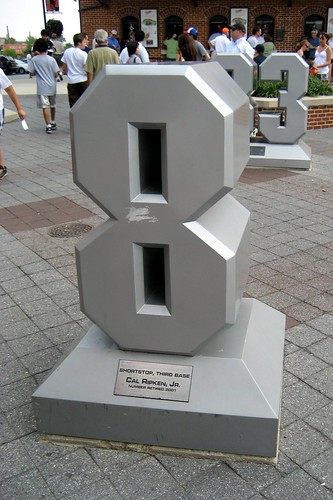
    Playing in their 18th season of baseball, the Marlins have accumulated some history, but have yet to commemorate some historic milestones.1 At some point in the not too distant future the Marlins will have to retire a number (The team retired the number 5 for Carl Barger on Opening Day 1993, but that doesn't really count since it was for a nonplayer). Who will the first former Marlin to receive that distinction? Some thoughts below, in order of likelihood.

    Gary Sheffield (not playing, but not officially retired): Sheffield was a mainstay for the first 5 years of the team's existence, holds some team single-season records, started for the 1997 World Series club, and could end up in the Hall of Fame. He's probably the most deserving member of this list at the moment.
    Mike Lowell (currently playing for Boston): Lowell was a key member of the infield core from 2000 to 2005, starting for the 2003 World Series club. He is currently the Marlins career home run leader, and wins sentimentality points for having grown up in South Florida.
    Jeff Conine (retired): Despite his status as Mr. Marlin, Conine's career stats are not the kind that normally get your number retired. However, his status as a team icon, role in both World Series teams, and current role as a special instructor in the Marlins organization might make up for his stats. He also has the complication of wearing two numbers during his time with the club.

    You'll notice I did not list anyone unlikely to retire soon. My guess is that someone's number will be retired shortly after the new stadium opens in 2012. It's a wild guess, but a necessary one for the purposes of this exercise.


    1For our purposes here, historic milestones include (but are not limited to): anniversaries of championships, retired numbers, and breaking of team/league records. In short, these are the things that remind us this team has been around for awhile. They are the edifice of permanence.

    Read more...

    Ah memories...

    Monday, April 5, 2010

    Thanks to Tom Verducci for reminding us:
    Part of the charm of Opening Day is that anything seems possible, including the idea that Emilio Bonifacio actually can hit. You might remember Bonifacio; baseball history always will. On a beautiful, sun-splashed day in Florida last year, the Marlins' Opening Day leadoff hitter smacked four hits, scored four runs, stole three bases and raced around the bases with the first Opening Day inside-the-park home run since one by Carl Yastrzemski in 1968.

    Bonifacio never hit another home run in 2009 - or much of anything else. He hit like it was, well, 1968. There were 155 players last year who were given enough playing time to qualify for the batting title. Bonifacio had the worst OPS of all of them.

    Read more...

    Marlins In Serious Talks For New Large Closer

    Thursday, July 30, 2009

    Late last night and throughout this morning there have been multiple reports about the Marlins aggressively pursuing Heath Bell of the Padres in a trade. Reportedly the asking price begins at either Andrew Miller or Sean West. Have the Padres not seen or read about Miller's two recent starts in the minors? We can talk about that later, but what dawned on me was that if we acquire Bell, the Marlins would once again have a closer who could be classified as a large man (I'm trying to be nice here, I could've said fat). Why is this important? Well, the majority of the Marlins closers that have been good have been large, and do not look like elite athletes. Here is some photographic evidence.


    So needless to say, the Fish need to try and get this deal done. Matt Lindstrom and Leo Nunez are far too fit and slim to be counted on as closers. They need to assume the setup roles and leave the closing duties to a man that can handle it. Heath Bell, that is you.

    Read more...

    On the Nationals

    Sunday, April 19, 2009

    Watching the Marlins' last two games against the Nationals brought back to me memories of the Marlins, c. 1999-2001, when the team was assembling the components of its 2003 World Series team, while experiencing many growing pains along the way. The Marlins had talent on those squads; Alex Gonzalez had been an All Star, Luis Castillo was becoming known around the league, and the pitching staff included prospects Brad Penny and AJ Burnett. But the team still had plenty of weak spots, and young talent does not always yield desired results.

    The Marlins blew many games in those years. They would lose a game 1-0 one night, then 8-6 the next. They would very rarely put together a complete game; one night the pitching would be great but the defense would commit four errors, the next night the offense would not be able to overcome a starting pitchers' bad outing. The team seemed to lose four out of every five one-run games. They were not bad. In fact they were kind of alright. But they combined a propensity for careless mistakes with bad luck. Watching them in those years could be intensely painful if not for the intermittent games in which they would put everything together and renew your faith.

    This year's Nationals squad has the same tendency to snatch defeat from the jaws of victory. Friday night, despite a dominating performance from starter John Lannan, the Nationals could only put two runs on the board, failing to plate anyone against the Marlins' bullpen after Ricky Nolasco exited before the fifth inning. The Nats blew a 2-1 lead with one out in the ninth, only to see Cody Ross erase it with one swing. The following inning, the Marlins pulled ahead for good on three straight singles.

    Saturday, the Nationals scored six runs in two innings off of Josh Johnson, and had to be feeling good with a 4-run lead after the second. But they did not muster a single run afterward, and only managed one base hit over the final nine innings. The Marlins grabbed one run in the 5th when Nick Johnson dropped a routine pop-up with two outs and a runner on third. Then, in the ninth, the bullpen blew another save on a two-run home run to Jeremy Hermida. Hermida repeated the feat with two on in the 11th, sealing another victory.

    The losses must be particularly heartbreaking to a fanbase who had little to cheer as the Nats started the season 0-7. The Nats are not a terrible team. They have some decent talent and a few promising young arms in the rotation. But their luck thus far has been terrible, exacerbated by some unfortunate but unforced errors in the last two games. Marlins fans were rewarded with their patience in 2003, we shall see if the Nationals will be able to match the feat.

    Read more...

    Statistical Anomoly Alert!

    Saturday, April 18, 2009

    Jorge Cantu reacts after striking out against Scott Olsen on Saturday (AP Photo/Alex Brandon)


    This week, ESPN.com's Jayson Stark informed us that the Marlins did something unprecedented:
    On Sunday, they struck out 13 times against Johan Santana -- and beat him. In their next game Tuesday, they whiffed 12 times against Braves starter Javier Vazquez -- and beat him, too.

    We combed through baseball-reference.com's fabulous Play Index and couldn't find any other team since 1954 that won back-to-back games in which it fanned that many times against the opposing starting pitcher. In fact, we found just three other teams that did that within the same week:

    1967 Red Sox (Catfish Hunter 12 K Sept. 12, Mickey Lolich 13 K Sept. 19)
    1977 Blue Jays (Dennis Leonard 12 K Aug. 14, Nolan Ryan 13 K Aug. 19)
    1990 Phillies (David Cone 12 K Sept. 7, Sid Fernandez 12 K Sept. 14)
    Everyone knows about the team's propensity for strikeouts, and now we know how historically significant their tendency to strike out is. And in the four games since facing Santana and Vasquez, the Marlins have continued the pattern:
    • 4/15 vs. Atlanta: 11 strikeouts, won 10-4
    • 4/16 vs. Atlanta: 10 strikeouts, won 6-2
    • 4/17 vs. Washington: 11 strikeouts in 10 innings (all in the first 9 innings), won 3-2
    • 4/18 vs. Washington: 11 strikeouts in 11 innings (8 in the first 9 innings), won 9-6.
    So in six consecutive games, the Marlins have won while striking out at least ten times. I believe Tim Kurkjian mentioned this streak on Baseball Tonight the other day, but I could not find any video of the segment on ESPN.com, unfortunately. The streak got a big boost from Emilio Bonifacio, who has gone 3 for 25 during the streak with an astonishing 11 strikeouts during the streak (that sound you hear is Ken Rosenthal saying he told us so).

    This streak does deserve an asterisk, though, as it took the Fish 10 innings to get their tenth strikeout this afternoon. Nonetheless, the streak is something that may never be replicated.


    UPDATE: The Marlins won again on Sunday, but only struck out three times, ending the streak.

    Read more...

      © Blogger template The Professional Template II by Ourblogtemplates.com 2009

    Back to TOP